A Guide to Building a Motivated Workforce

In today’s competitive job market, businesses are constantly searching for ways to attract, retain, and inspire top talent. One powerful strategy that often goes overlooked is the integration of education into the workplace. By investing in the professional development of your employees, you can create a more engaged, motivated, and productive workforce.

Build a Talent Pipeline Through Education

  • Leverage local workforce groups: Share job openings and communicate with local businesses from all industries. Setup talent pipelines that help employees get the training and experience to onramp with your organization now and in the future.
  • Partner with local schools and universities: Collaborate with learning providers to develop internship and apprenticeship programs that offer students with real-world experience.
  • Offer employee referral bonuses: Incentivize existing employees who refer qualified candidates from their personal networks.
  • Create a strong company brand: Highlight your company’s commitment to education and professional development in your recruitment and public relations materials.

Foster a Learning Community in the Workplace

  • Provide ongoing training and development opportunities: Offer a variety of learning options, including workshops, conferences, and online courses.
  • Encourage peer-to-peer learning: Create opportunities for employees to share knowledge and skills with one another.
  • Recognize and reward employee achievements: Celebrate milestones and accomplishments to boost morale and motivation.
  • Foster a culture of continuous improvement: Encourage employees to seek feedback and strive for excellence. Use gamification and team building along with a rewards system.

Reimagine Talent 

  • Embrace lifelong learning: Promote a growth-minded workforce culture where employees are rewarded for seeking opportunities to expand their knowledge and skills. Support interdisciplinary education.
  • Use history as your guide:Look into your industry’s history to find out what worked before technology. Sometimes the old ways are best and they could inspire new innovations.
  • Support employee career aspirations: Help employees identify their career goals and develop a plan to achieve them. Whenever possible, filter workers in instead of filtering out.
  • Use data and intuition: Track key metrics to assess program effectiveness, but also use intuition. Test new approaches on a small scale and learn from those experiences.

By prioritizing education, you can create a workplace where employees feel valued, empowered, and motivated to succeed. This, in turn, will lead to a more engaged, productive, and innovative workforce that can help your business thrive in the years to come. If you’d like to learn more about how to use education as a strategic advantage, Book a Meeting with Dream2Career and let us help you reimagine your talent pipeline so the system works for everyone. 
Cybersecurity: Wild West of Threats and Opportunities

In today’s digital age, the world is becoming increasingly interconnected, and with it, the risks of cyberattacks have skyrocketed. From identity theft to data breaches, the consequences of these attacks can be devastating. As a result, the demand for skilled cybersecurity professionals has never been higher.

Is a Cybersecurity Career Right for You?

Before diving into a cybersecurity career, it’s essential to understand what it entails. Cybersecurity professionals are responsible for protecting computer systems, networks, and data from cyber threats. This involves identifying vulnerabilities, implementing security measures, and responding to incidents. If you have a strong interest in technology,problem-solving, and protecting sensitive information, a cybersecurity career might be a perfect fit.

The Ethical Frontier of AI

Artificial intelligence (AI) has the potential to revolutionize various industries, but it also presents significant ethical challenges. As AI becomes more sophisticated, there is a growing concern about its misuse. For instance, deepfakes and misinformation campaigns can be used to manipulate public opinion and spread disinformation. Cybersecurity professionals play a crucial role in addressing these ethical concerns by developing AI-powered security solutions and ensuring that AI is used responsibly.

The Cryptocurrency Conundrum

Cryptocurrency has gained immense popularity in recent years, but it’s also a highly volatile and speculative asset. If you’re considering investing in cryptocurrency, it’s essential to understand the risks involved. Cryptocurrency markets can be highly volatile, and there is a risk of losing your investment. Additionally, there are concerns about the security of cryptocurrency exchanges and the potential for scams.

Emerging Careers in Cybersecurity

As the cybersecurity landscape continues to evolve, new career opportunities are emerging. Some of the most in-demand roles include:

  • Cybersecurity Analyst: Responsible for identifying and assessing security risks.
  • Ethical Hacker: Uses hacking techniques to identify vulnerabilities in systems.
  • Incident Responder: Handles security breaches and data breaches.
  • Digital Forensics Investigator: Analyzes digital evidence to investigate crimes.
  • Blockchain Security Specialist: Protects blockchain networks and cryptocurrencies from attacks.

Discover Your Cybersecurity Path with Micro-Drip

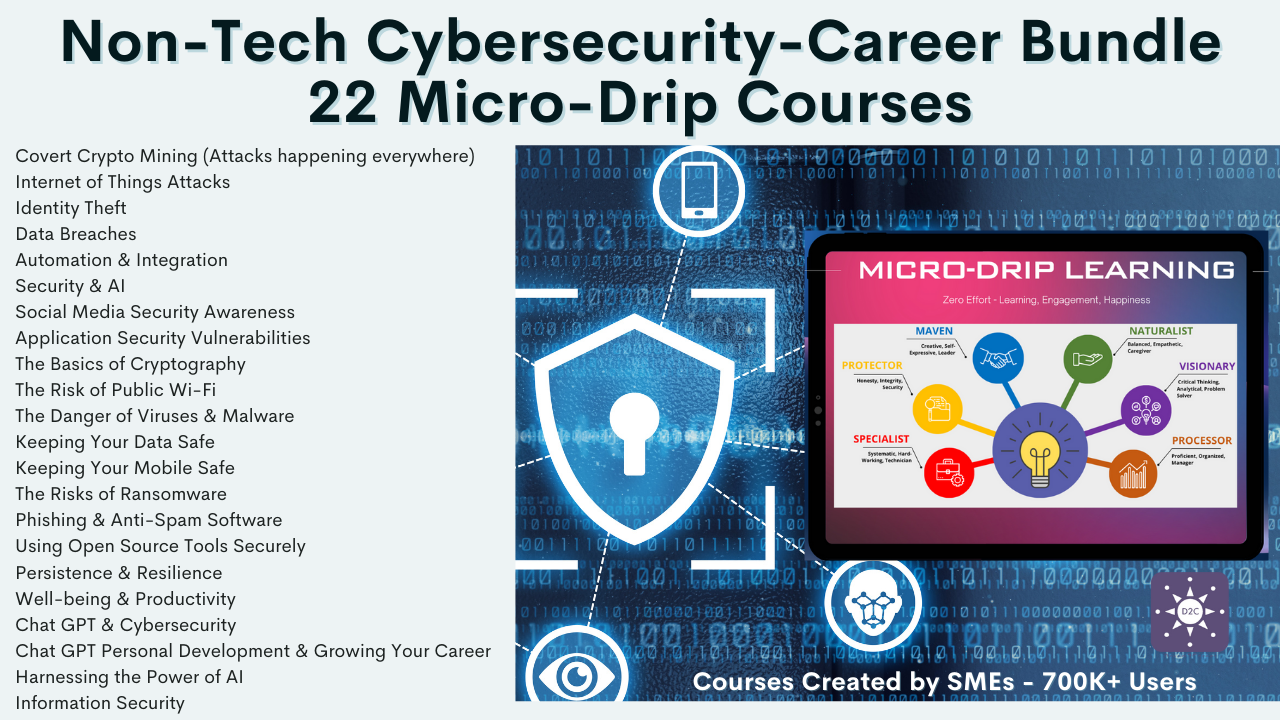
If you’re considering a career in cybersecurity,  Dream2Career’s Cyber-Career Micro-Drip Bundle  offers a gamified micro-course approach that can help you understand the buzzwords and “try on” cyber learning with a small commitment of time. These courses are designed making it easy to learn at your own pace but structured enough to keep you on track. By completing these courses, you can gain a solid foundation and discover if cybersecurity is right for you. 

Cybersecurity is a critical field that offers exciting and challenging career opportunities. As the digital world becomes increasingly complex, the demand for skilled cybersecurity professionals will only continue to grow. By understanding the risks and opportunities associated with cybersecurity, you can make an informed decision about whether this career path is right for you.

Cyber Security for Everyone: Why Non-Technical Training is Key to Reduced Breaches

Understanding ISO 27001 Compliance

Many companies work hard to comply with ISO 27001, a set of rules that helps businesses protect their data. But even with this, there are still data breaches. Why? It’s often because of mistakes made by people who use the company’s computers, not the computers themselves.

Imagine you’re playing a video game. You know how to play the game, but sometimes you make mistakes. The same thing can happen with computers. People who use computers might accidentally do something that lets hackers in.

The Importance of Non-Technical Training

To stop this from happening, companies need to teach everyone who uses their computers about cyber security. It’s like teaching someone how to cross the street safely. Even if you’re not a traffic expert, you know the basic rules to stay safe.

Non-technical training helps people understand what hackers might try to do and how to avoid it. It’s like having a secret code that only you and the people who know about cyber security understand.

Dream2Career’s Cyber-Compliance 22-Microcourse Bundle

If you want to learn more about cyber security, Dream2Career’s Cyber-Compliance 22-Microcourse Bundle is a great place to start. It’s like a fun video game where you learn important skills.

By taking this Micro-Drip Shared Learning Experience with your team, you can help your company stay safe and protect your data. And remember, every little bit helps! When we all work together to stay safe online, we can make the world a safer place for everyone.

Hiring Challenges: Employee-Driven Branding

In today’s competitive business landscape, a strong brand is more crucial than ever. And while traditional marketing efforts play a vital role, your most powerful brand ambassadors might already be within your organization: your employees.

The Power of a Well-Defined Mission and Culture When employees feel a deep connection to your company’s mission and culture, they are more likely to go above and beyond their job duties. A clear sense of purpose can inspire employees to work harder, smarter, and with greater enthusiasm.

Creating a Sense of Belonging A strong sense of belonging is essential for fostering employee engagement and loyalty. By creating a workplace where employees feel valued and appreciated, you can encourage them to become passionate advocates for your brand. Here are some tips to consider:

  • Education as a Strategic Advantage: Invest in employee development and education to help them grow their skills and knowledge. This not only benefits employees but also strengthens your organization’s capabilities.
  • Shared Experiences: Foster a sense of community through shared experiences, such as team-building activities, gamified learning experiences, or social events.
  • A Greater Purpose: Help employees understand how their work contributes to a larger, more meaningful purpose.This can be achieved through storytelling, recognition programs, or opportunities to give back to the community.
  • Collaborative Problem-Solving: Empower employees to work together on teams to solve the company’s greatest challenges. This fosters a sense of ownership and encourages innovation.
  • Welcoming New Ideas: Create a culture that values diversity of thought and encourages employees to share their ideas. This can lead to new and innovative solutions.
  • Supporting Old Ways and Customs: While embracing change is important, recognizing and respecting traditions can also contribute to a strong company culture.

The Benefits of Employee-Driven Branding When employees are valued and empowered, they are more likely to:

  • Refer Friends and Family: A positive employee experience can lead to referrals, making hiring easier and more effective.
  • Represent the Brand Proudly: Employees who are proud of their company are more likely to represent the brand positively in their personal lives.
  • Build Strong Relationships: Employees can leverage their personal networks to build relationships with potential customers and partners.

Measuring Employee Engagement and Brand Advocacy To effectively track employee engagement and brand advocacy, consider using a hyper-precise segmentation strategy like HIF Logic. This approach can help you identify specific cultural identifiers that define your brand and measure how well your employees align with them.

By investing in your employees and fostering a strong company culture, you can empower them to become powerful brand ambassadors who help drive your organization’s success.

Want to learn more about how to leverage your employees as brand ambassadors? Contact Dream2Career today.

Unplugging: A Necessity in Today’s Digital Age

In our increasingly digitized world, where the lines between work and personal life are blurring, it’s becoming increasingly difficult for individuals to truly switch off. The constant pressure to be “always on” has led to a rise in burnout, stress, and mental health issues.

Schools Leading the Way

Recognizing the detrimental effects of constant connectivity on young minds, schools are taking proactive steps to address this issue. In many regions, there’s a growing movement to eliminate mobile devices in the classroom. While this might seem controversial to some, it’s a clear indication that there’s a growing awareness of the need to protect children from the constant distractions and pressures of digital technology.

HR Managers: It’s Time to Follow Suit

HR leaders should take note of these developments and consider implementing similar policies in the workplace. While security concerns are often the primary motivation for restricting mobile device use, there are also significant benefits for employee mental health and productivity.

By encouraging employees to unplug and disconnect from work, HR managers can:

  • Reduce burnout: Constant connectivity can lead to feelings of overwhelm and exhaustion. By creating designated “device-free” zones or times, employees can have a much-needed break from the constant demands of work.
  • Improve focus and productivity: When employees are able to truly switch off, they can return to work with renewed energy and focus.
  • Foster a healthier work-life balance: Setting boundaries between work and personal life is essential for overall well-being. Encouraging employees to unplug can help them achieve a better balance and reduce stress.

Start a “Mental Health Diet Program”

HR leaders who are committed to creating a sustainable, productive, and engaged workforce should consider implementing policies that promote unplugging. By prioritizing employee well-being and fostering a healthy work-life balance, organizations can attract and retain top talent, improve productivity, and create a more positive workplace culture.

Ready to take the next step? Contact Dream2Career for agile HR solutions that help employees bring their authentic selves to work. Our experts can provide guidance on implementing policies that promote unplugging, improve employee well-being, and foster a thriving workplace culture.