Beyond the Bottom Line: Investing in Education to Ignite Innovation and Resilience

In today’s volatile economic landscape, many executives are understandably focused on cost-cutting and risk mitigation. However, true, sustainable success hinges on a far more profound investment: the education and development of your human capital. Building a profitable company isn’t just about maximizing output; it’s about fostering a thriving ecosystem where individuals feel valued, empowered, and connected.

The Human Component: Defining Your Purpose

Before any strategic plan or financial projection, ask yourselves: What does our company truly stand for? How will we flourish, not just survive? What is our defining purpose and mission? These philosophical questions are the bedrock of a resilient and innovative organization. To unlock the full potential of your workforce, from the factory floor to the C-suite, you must cultivate a culture of continuous learning and growth.

Education as the Catalyst for Innovation and Connection

A workforce confined to their individual tasks, operating in silos, is a recipe for stagnation and disengagement. To foster a growth mindset, encourage employees to expand their knowledge beyond their immediate roles. Provide opportunities for them to explore diverse fields, engage in critical thinking, and develop a holistic understanding of the organization’s mission.

The Power of In-Person Learning:

While online learning offers convenience, it often lacks the crucial elements of collaborative problem-solving and social interaction. College campuses and site-based learning environments provide invaluable opportunities for employees to:

  • Engage in dynamic discussions: Face-to-face interactions foster deeper understanding and critical thinking.
  • Build strong relationships: Shared learning experiences create bonds that enhance teamwork and collaboration.
  • Experience diverse perspectives: Interacting with individuals from different backgrounds broadens horizons and sparks innovation.
  • Immerse themselves in a learning environment: Distractions are limited, and focus is increased in a dedicated learning space.

Transparency and Shared Challenges: The “Major League” Principle

When challenges arise, transparency is paramount. Employees who are kept in the dark breed rumors and disengagement, leading to decreased morale and productivity. Instead, embrace honesty and face challenges together.

The movie “Major League” offers a powerful analogy. A team deliberately assembled to fail, stripped of resources and filled with misfits, ultimately triumphs through shared purpose and collective effort. By presenting challenges as opportunities for collective growth, you can inspire your team to rally around a common goal and exceed expectations.

Building a Culture of Collaboration and Shared Purpose

Just as a successful baseball team relies on each player understanding their role and supporting their teammates, a thriving organization requires a culture of collaboration and shared purpose. This means:

  • Clearly defining roles and responsibilities.
  • Promoting open communication and feedback.
  • Recognizing and celebrating individual and team achievements.
  • Creating a sense of belonging and shared ownership.

Investing in the Future: A Call to Action

In times of uncertainty, it’s tempting to retreat and play it safe. However, true leadership lies in embracing challenges and investing in the future. Now is the time to innovate, to inspire, and to build a workforce that is ready to overcome any obstacle.

Empower your people through education, unite them through shared purpose, and watch your company achieve extraordinary results.

We at Dream2Career understand the importance of human capital and the need to invest in your employees. We can help you implement a human capital solution that will make your company an industry leader and the envy of your competitors. Contact us today to learn more.
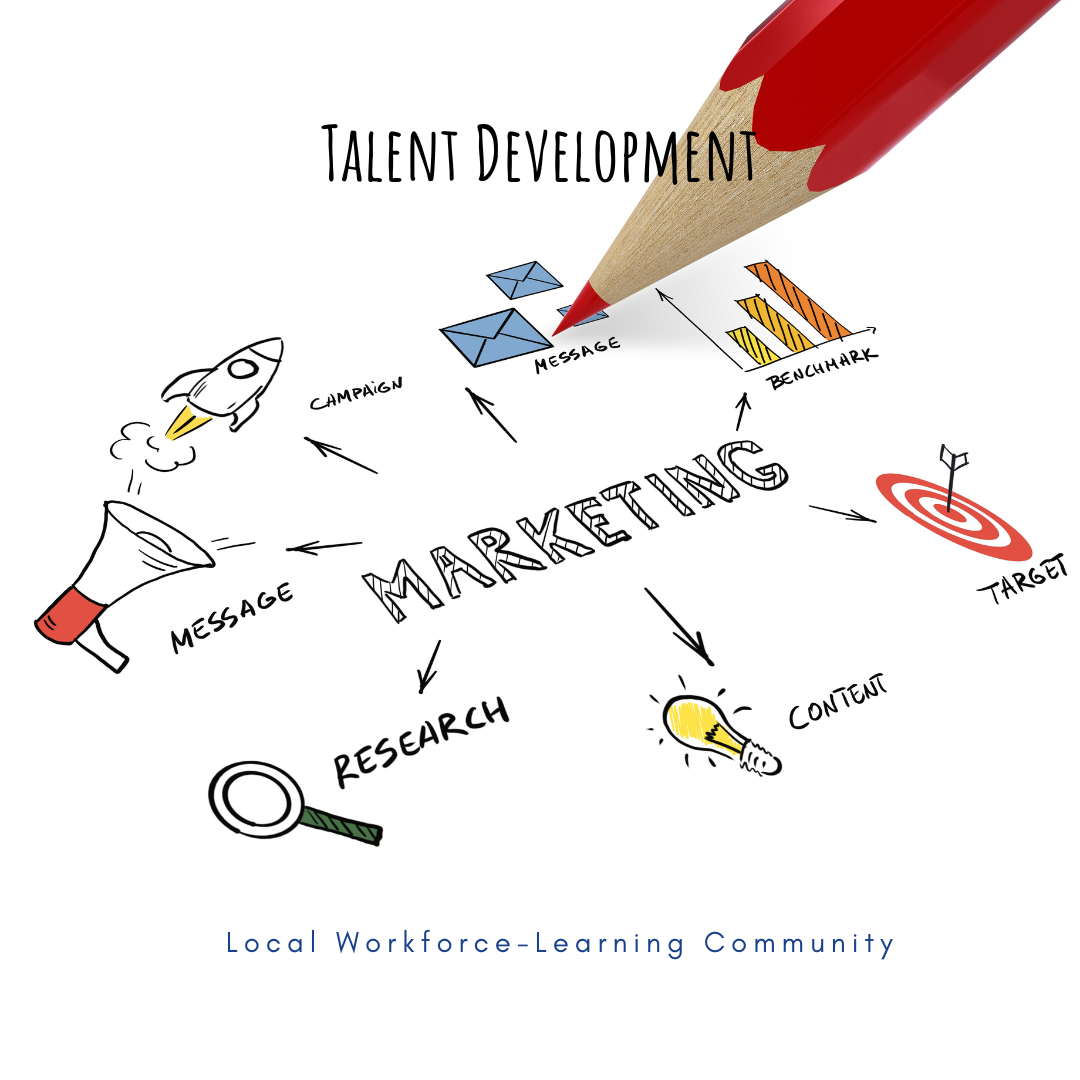

Attracting, Retaining, and Motivating Workers: A Marketing Challenge

In today’s competitive job market, attracting, retaining, and motivating top talent is a significant challenge for businesses. Organizations of all industries struggle with high turnover rates do to employee dissatisfaction. Furthermore, the image of workers underperforming in the workplace significantly hinders the company’s image in the eyes of the public and because of worker mistakes, employee behavior could lead to legal consequences. Therefore, marketers must work with HR leaders to develop innovative strategies that build a growth minded-workforce, one that projects insightful brands that support workers and their communities.

The Talent Recruitment Business is a Local Business

Companies are hiring more remote workers than ever. However, that doesn’t mean employers need to look globally to find qualified talent. Companies should consider developing recruitment strategies that support the location and the region of their offices.

Think Local: Often, the talent companies are seeking lives right down the street. According several studies conducted by Pew Research, the majority of adults live in their hometown where they grew-up. A record number of young adults, not seen since the Great Depression, are still living with their parents in the post-COVID era. By focusing on local recruitment, employers can tap into a pool of candidates who are familiar with the company and they are less likely to leave because of the company’s connection to their community. Hiring local can also reduce relocation costs and it creates goodwill with neighboring businesses for collaboration and enriching local engagement which is the gold standard in brand development. 

Employees as Brand Ambassadors

Employees play a crucial role in shaping a company’s brand. How they perceive and experience the company culture directly impacts how they interact with customers and potential recruits. By prioritizing employee satisfaction and engagement, marketers can create a positive and authentic brand image.

Collaboration with HR: To ensure a strong alignment between HR and marketing, it’s essential for the Chief Human Resources Officer (CHRO) and Chief Marketing Officer (CMO) to meet regularly. By working together, they can develop strategies to enhance employee experience and promote the company as an employer of choice.

A Community-Based Approach

Instead of relying solely on national campaigns, consider a more localized, gamified, educational approach to talent recruitment. By partnering with local communities, you can build relationships with educational institutions, community organizations, and local businesses to attract top talent.

Leveraging Local Initiatives: Initiatives like Operation Dream Landing in Indianapolis, run by Dream2Career, provide a valuable opportunity to connect with local talent and to build a workforce learning community. By participating in such programs, companies can showcase their commitment to education and community development while building a strong pipeline of motivated employees.

Conclusion

Attracting, retaining, and motivating workers requires a multifaceted approach that combines traditional recruitment methods with innovative strategies. By focusing on local talent, prioritizing employee experience, and collaborating with HR, marketers can create a compelling employer brand and build high-performing teams.

Hope: The Secret to Worker Retention

According to US News & World Report, people feel sad and hopeless when they read the news.  This is having a huge impact on communities across the nation. When we feel depressed, we are not motivated to work. The consequences for businesses are less workers seeking employment, less workers showing up on time, if they show up at all. The blaugh feeling, that we are all feeling from reading the news, means businesses are forced to cut hours of operation and reduce production making it impossible to get things back to normal. We don’t have the conveniences that we once shared because people lost hope that things will get any better and they even believe things are getting worse. Perception is reality and this hopeless feeling must change if we ever want to feel accomplished, happy, and productive again.

Companies are offering hiring bonuses and better salaries, but these options do little to change the employee sentiment about having to go to work or their overall feelings of hopelessness. You can have all the money in the world, but if you are not happy,  it makes it difficult to enjoy the benefits that financial security provides.

Today’s workers prefer work-from-home jobs, not realizing this level of isolation is leading to more feelings of depression and hopelessness. According to the American Psychological Association, a study conducted by Cigna in 2018, found that 40% of participants sometimes or always felt isolated. Note this study was conducted before the pandemic. The article posits that isolation leads to poorer health, early death, and a reduced quality-of-life. These challenges impact the individual but, they also negatively impact our families and communities. The sentiment of being sad, from the news that we read, is passed on to the next person forcing everyone into feeling angry and scared, lacking the confidence we once had to fix the situation.

Schools used to be seen as a place for connection, discovery, and growth but schools are now being attacked in the media, from all sides, because of opposing views, costs, and lack of trust. These feelings of hate and fear are causing communities to turn on each other making them more violent and less productive. Schools used to give a sense of belonging, offering a place where it was safe to develop and learn, but now everything is under a microscope. We are all looking for ways to control the schools because we feel so out of control in our personal lives. The worst part is that the children are the ones who are impacted the most. Children don’t know who to trust or who to believe, which is negatively impacting their psychological development.  Society cannot flourish when there is fear and violence.  Remember the Dark Ages?  Children are forced to do active shooter drills and they are told the police are bad and their teachers are bad. These generalizations don’t reflect most of the people performing in these professions in my community. I bet most of the professional teachers and police officers in your community are good people, too.

Business leaders have an opportunity to step in and support their community and their employees by offering benefits and experiences that improve their overall quality-of-life. This means looking beyond the salary and using resources and influence to make communities a better place to work, learn, and live. Empowering employees to become the best versions of themselves will make them better contributors to your community and, consequently, better contributors to the bottom line. The process begins with a mindset shift and a focus on solving the things that can be fixed and giving people hope.

Instead of blaming the government, the schools, the workers, or the general state of the world. Focus on what can be done and look for ways to work with others interested in supporting positive endeavors to make communities thrive. No one is perfect and it is time we start to look past what we read, our flaws, and our differences and focus what we have in common; an interest in raising and working with productive collaborative citizens who are living without fear or hate. We can bring about positive change if we just learn trust and respect people again.

This minor shift in mindset will change the culture of your organization and your community. Leaders manage challenges and objections everyday and if they lead by example; by showing kindness, humility, and support, the climate will change. Employees will respect their employers and start to trust that things can get better. They will feel a sense of accomplishment and purpose about what they are doing.  Employees will be compelled to support their employer because  they will see that their employer wants them to succeed. The idea that tomorrow could be better than today will help them get out of the house and show up to work—show up for life.

Follow the lines from Beauty and the Beast:

Tale as old as time
True as it can be
Barely even friends
Then somebody bends
Unexpectedly

Just a little change
Small to say the least
Both a little scared
Neither one prepared…

By Celine Dion, Peabo Bryson

Our nation will always be the Beast; rich, powerful, and in some ways ugly, but we will not win if we don’t support each other, especially during our darkest days. Every interaction gives us the opportunity to return life to normal and provide hope for what is yet to come.

If you would like to discuss community focused talent development strategies that offer hope and inspiration, contact Dream2Career.

About the Author:

Kathleen Houlihan, is the CEO of Dream2Career and writes about creating synergies between workforce and education. Houlihan taught full-time at the university level for over 6 years and continues to teach as an adjunct while consulting for businesses and educational providers. She serves on several workforce development groups including the T3 Innovation Network and Midwest Credential Transparency Alliance and has a Ph.D. in Organizational Management, an MBA, and B.A. in Psychology.

Dream2Career (D2C) is a women-owned agency that reimagines talent acquisition and optimizes the system for candidates and employers. D2C provides human-centric solutions that filter-in candidates who exceed expectations in the workplace.

Think Local – Hire Local

Businesses are seeking talent for vacant positions.  Why not consider hiring the person who is bagging your groceries or someone who holds the door for you? We come in contact with great people everyday, yet we turn to job boards to determine who we might employ. Instinctually, we know a good person when we meet them and for entry-level positions and, maybe, mid-level positions it might be more beneficial to your company and your community to think local.

If you need specialized training or skills for your employees turn to the education providers in your community. These local training providers will serve you better and for a fairer price then  “big-box, little content” degree mills that steal, money from the student and the opportunities from your community. If you work with the local education providers, they will help you to create a workforce pipeline that will serve your needs in the future and they will reduce your talent acquisition costs and even improve employee retention rates.

Try contacting your local workforce development teams and even get involved with projects in your community. Local groups offer community-based projects that are reimagining talent development and provide win-win solutions that benefit the employee and the employer.

Technology is cool, but it is only one of many tools that solve the worlds problems. Dream2Career believes that companies should start using collective impact solutions to bring back small town America.  This means using data, but also using logic and intuition. If something makes sense, it doesn’t need to be backed by years of research. It’s time to step back from technology and find new ways to inspire hope and innovation in the next generation workforce.

If you would like to discuss collective impact opportunities for your organization, contact Dream2Career.

Dream2Career (D2C) is a women-owned RPO agency that reimagines talent acquisition and optimizes the system for candidates and employers. D2C provides human-centric solutions that filter-in candidates who exceed expectations in the workplace.

Investment in Talent Pays Off For Businesses

Here are a few reasons to consider investing in talent during this time of record low unemployment.

  1. Using education to attract and retain talent is cost-effective. Paying job boards to post an entry-level, site-base position to reach candidates across the nation, wastes time and resources. Because job boards are keyword driven, they are designed to filter candidates out rather than filter candidates in. Only 35% of career seekers find their job using the position title, which is the main filter when using job boards. Because of the pandemic, candidates are searching for remote positions and the job boards can’t handle this search request uniformly, meaning quality candidates get missed and don’t become part of your prospective applicant pool. A better solution is to work directly with local educational providers when on ramping new talent. Not only can the educational system provide a talent pipeline, but it can also provide motivated candidates who want to grow with your organization. These prospective employees are also invested in the local community making them more likely to stay and thrive within the company.
  2. Here is a link to five studies, conducted in collaboration with the Lumina Foundation, that show talent development is worth the investment for businesses. Education related solutions offer a 5X ROI and inspire hope by upskilling current workers, which builds a community around education.
  3. Communities can work together using education to provide “collective impact”. Organizations have a shared mission to attract and retain qualified talent and organizing locally helps to streamline the messaging by illustrating career onramps that simplify outreach to students and career seekers. Harvard Business Review, recently conducted research with 73 business leaders, and they uncovered the need for this type of collaborative process which includes a “common agenda, explicit goals, metrics to measure success, and a funded “backbone” organization to ensure continuity.” This process can also benefit from a shared communication strategy like the one provided by the Horizontal Industry Framework.
  4. The most innovative companies are using education as a strategic talent advantage. InsideHigherEd and CNBC show how companies like Chipotle, FedEX, and Walmart are using education to attract and retain top talent. These companies are not only using education programs, they are expanding their offerings with new employee-focused training solutions. These companies are offering their workers something more than a paycheck, they are on ramping them into dream careers and providing their employees with a strong sense of belonging. By taking an interest in their employees’ personal and professional growth, they now have loyalty in the culture which provides an opportunity for relationship building in fun and engaging ways, consequently, helping employees to live their best life.

If you would like to discuss opportunities for your organization to use education as a strategic advantage, contact Dream2Career.

Dream2Career (D2C) is a women-owned RPO agency that reimagines talent acquisition and optimizes the system for candidates and employers. D2C provides human-centric solutions that filter-in candidates who exceed expectations in the workplace.