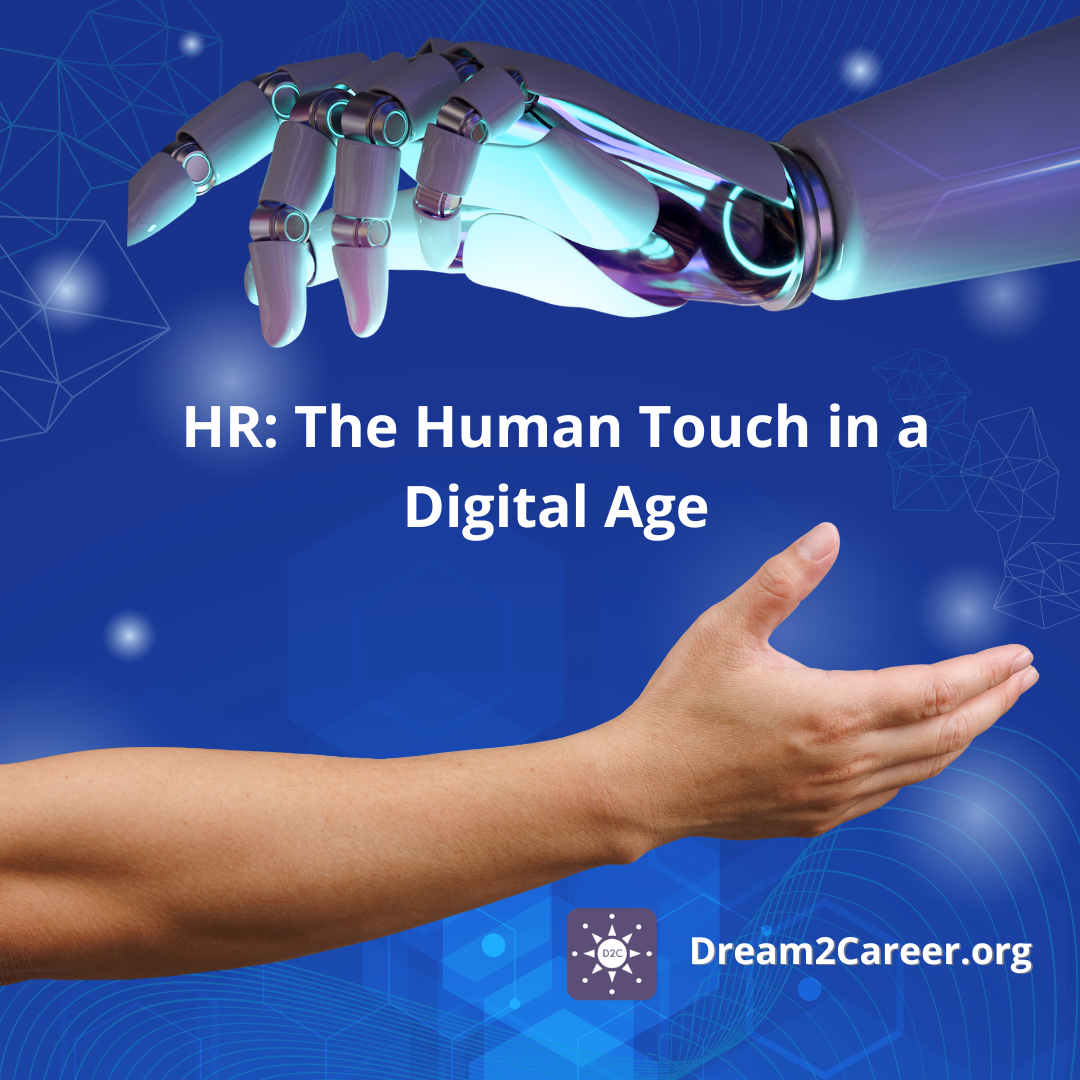
HR: The Human Touch in a Digital Age

In the relentless pursuit of efficiency and profit, many organizations have sacrificed the human element for the allure of automation. This is particularly evident in the realm of Human Resources (HR). While technology has undoubtedly streamlined processes, it has also created a cold, impersonal barrier between companies and potential employees.

The Importance of Human Connection

HR departments, once the heart of an organization’s connection to its workforce, are now often reduced to automated systems and impersonal online portals. While these tools have their place, they should not replace genuine human interaction. When potential employees are met with automated phone systems and endless online forms, it creates a negative impression of the company.

Imagine if every customer interaction with a business was automated. While it might be efficient, it certainly wouldn’t foster loyalty or brand affinity. The same principle applies to HR. By investing in human interaction, companies can create a positive candidate experience and build a stronger employer brand.

Cybersecurity and Privacy: HR’s New Frontier

The over-reliance on technology has also led to a significant increase in cybersecurity risks. The vast amounts of personal data collected by organizations have become a prime target for hackers. This not only puts the company at risk but also compromises the privacy of individuals. HR departments must play a crucial role in safeguarding this sensitive information.

The excessive collection of data has become a standard practice in many industries. From job applications to medical records, individuals are required to disclose an overwhelming amount of personal information. This not only creates a privacy concern but also diminishes the trust between individuals and organizations.

A Return to Human-Centric Practices

It’s time for organizations to prioritize the human element over convenience. By investing in a human-centric approach,HR departments can create a positive candidate experience, build stronger relationships with employees, and protect sensitive information.

Here are some key steps organizations can take:

  • Prioritize human interaction: Invest in staff to answer HR calls and provide personalized assistance.
  • Limit data collection: Collect only the necessary information and implement robust security measures to protect it.
  • Focus on local talent: Build relationships with local educational institutions and create opportunities for career development within the community.
  • Embrace technology thoughtfully: Use technology to enhance the human experience, not replace it.

By adopting these practices, organizations can create a more human-centered workplace that prioritizes both employees and customers. It’s time to remember that behind every application, resume, and data point is a real person.

What are your thoughts on the role of HR in today’s digital age? Share your experiences in the comments below.

Contact Dream2Career and learn how to improve the human experience by creating a workforce-based learning community using HIF LOGIC. 

Build a Motivated Workforce

Stop looking beyond your town and use local resources to grow the workforce that meets your employment needs. Invest in workers, pay them well, but also help them develop personally and professionally. The best way to do this is to develop and USE an educational reimbursement program (ERPs).

Many companies have ERPs, however, less than 7% of employees use the benefit. Consequently, those that do use the benefit are 80% more likely to stay with the company and to feel valued by the organization. These worker-learners are also more likely to refer a friend to the company which can help to alleviate the employee shortage problem that most organizations are facing.

Fully online learning programs should not be the mission of businesses or learning providers. Businesses should fight the urge to simplify their training portfolio and institute guardrails around the usage of online learning that includes, at a minimum, a hybrid approach. Students who attend face-to-face classes gain access to networks and experiences that they do not effectively get online.

The online learner has no allegiance to the online learning provider, and, in many cases, the student is simply going through the motions to complete the course, not because they are curious or engaged, but because they feel the need to just get through the course. We’ve made a world of exceptional test takers who lack humility, collaboration, critical thinking, or a passion for learning. They know how to check boxes, but they have zero understanding of the who, what, why, or how, which are vital to the brain’s ability to understand and recall information when needed.

Local colleges and technical schools are struggling, and this is tragic, because they can be businesses’ greatest asset when it comes to attracting, retaining, and motivating workers. Online job boards and large employment agencies may be able to offer businesses access to 10 million resumes, but, small-town America, guess what? You’re lucky if these services have 3 prospects, from your location, that will be useful to your search.

Site-based learning providers offer work-learn options like apprenticeships and internships that are effective at upskilling workers. However, the motivation problem often still exists because most students have no idea what they want to do for a career. They don’t have enough input or experience to know what is available to them and when they enroll in work-based learning they are, again, just going through the motions to get the job and they rarely consider if it matches who they are or what they like to do. These work-learn solutions, use education to grow employees, may still lead to disengagement and high dropout rates because the employees miss the purpose and understanding of how they are valued within the organization.

To reimagine the work-learn problem, Dream2Career developed what is called Micro-Drip Learning to help employees understand their value to the organization, so they know who they are and what they bring to their employer. Through the consumption of daily 15-min microcourses, users gain confidence, interest, and hope through learning and gamification.

These courses are designed to help users to understand their strengths, and weaknesses, and the strengths of our differences. Through these shared experiences, users find like-minded people, engage in local events, and they learn about educational opportunities that help them develop personally and professionally.

Imagine having employees that love to come to work every day because they are working in or towards their dream career. They become inspired to participate and contribute because you are helping them to learn and grow and you’re giving them access to opportunities that make life worth living.

If you’d like to learn more about Micro-Drip Learning and how to integrated it in with your current Educational Reimbursement Program, or if you’d like to design a new ERP and use education as a benefit, with significant tax breaks, contact Dream2Career.

Contact Kathy Houlihan at khoulihan@dream2career.org

Quality-of-Life Benefits Inspire Employees

In the past, high school students had three choices; 1. go to college, 2. go into the workforce via the trades, or 3. go into the military. Today, these three options have evolved into countless options including badges, internships, co-ops, and certificates, just to name a few. According to Credential Engine, there are close to 1 million credentialing options in the USA alone. These new educational pathways have increased the number of nefarious training options designed to take a students’ money while offering limited employment opportunities upon completion.  Undecided career seekers are mesmerized by clever marketing campaigns with false employment promises making it very difficult for them to find the best pathway forward.

Business leaders like Whole Foods CEO, John Mackey believe that young people don’t want to work, but it is more likely that young people just don’t know who to trust and they, often, do not know who they want to become, making it very difficult to chart a pathway forward. Students are frozen in fear, not being able to find the best career on-ramps that match their interests and aspirational goals. These individuals are not shown how working for a company like Whole Foods, even entry-level, provides tremendous opportunities for networking, education, and professional growth.

Social media is flooded with volumes of data about high demand career options and careers with the highest salaries. These factors might be important to a job seeker; but they are far from the best measures to help candidates find and prepare for their dream career. The practice of pushing supply and demand or high income logic onto career seekers limits their chances of finding interesting career pathways that would help them to navigate the workforce system more effectively. These types of traditional workforce data limit career seekers ability to discover ways of making a career doing what they love.

Reimagining talent needs to focus on helping students/entry-level employees to discover opportunities that make them excited to learn and grow; where they see personal potential for career success. If the individuals can find jobs that match their passions, help them onramp, and gain requisite skills matching their interests, they will want to work. Employees will see work as a learning experience and they will want to grow with the company so they become the best versions of themselves. Providing educational benefits to employees has been shown to create loyal employees and increase job satisfaction, while offering 5x ROI, according to several studies conducted by the Lumnia Foundation.

Innovative companies use quality-of-life benefits (QoL), like education, in their talent recruitment portfolio to reimagine talent acquisition.  The most effective quality-of-life programs support local communities by creating an ecosystem that attracts new businesses and commerce to the environment. Building a community of engagement, through QoL programs, highlights what is happening locally and it helps individuals find career pathways to success. Reimagined talent acquisition, using QoL, incorporates the three-pronged work-learn system of the past; college, trades, and military experiences, into a new blended system that helps networked employees navigate this new complex work-learn environment as it inspires and delights career seekers as they on-ramp to dream careers. QoL programs are the best option to attract talent, improve working conditions, and provide more profitability, while reducing hiring costs. For businesses struggling to attract and retain talent consider QoL programs because we’ve found that it is the best strategy to reimagine talent acquisition into a system that works for everyone.